Journal · 5 min read
Flower delivery in Europe: how to order from abroad
By Javier Morales · · updated on
To arrange flower delivery in Europe from abroad, choose a provider serving the recipient’s exact address and confirm the delivery date, full price and bouquet brief before paying. Order from the destination city when that gives you clear contact with the florist, but judge the service by its confirmed arrangements rather than its label.
How to choose flowers for different European cities
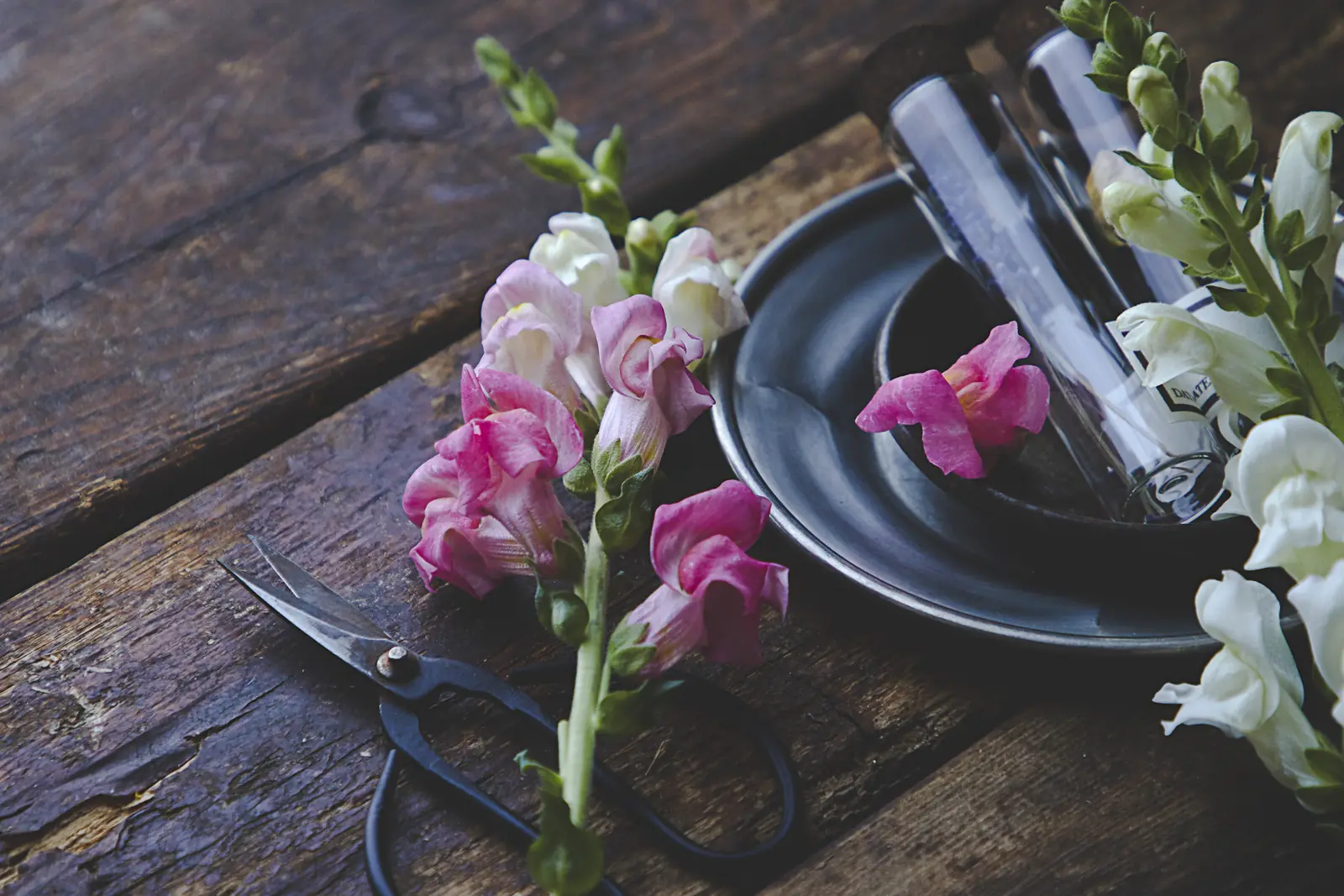
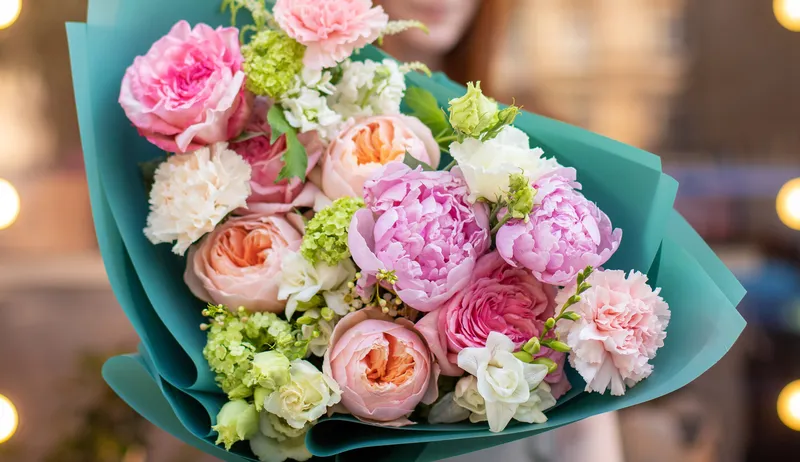
Choose for the recipient’s home and taste before choosing for the city. Ask whether the flowers will go on a small desk, a dining table or a reception counter. Mention a favourite colour, disliked scent and whether a vase is available. “Soft pink and cream, about the size of a dinner plate, for a small flat” is a more useful brief than “something impressive”.
Treat size descriptions carefully: “large” can mean different things in two shops. Ask whether the photograph represents the selected size, whether a vase is included and which parts of the arrangement may change. A compact bouquet with a clear shape can be easier to place and carry. If the recipient will collect it from an office and travel home, say so before ordering.
Paris, Rome, Amsterdam: check the address before the style
A Paris apartment, a Rome hotel and an Amsterdam office each need a different delivery brief. For a flat, supply the bell name and entry details. For a hotel, use the reservation name and confirm the guest will still be staying there. For an office, identify the company and reception hours. Use the address exactly as the recipient gives it, including local spelling, rather than translating the street name.
The language of flowers offers historical inspiration, but it is not a universal code that every recipient will read alike. A white bouquet can feel elegant, comforting or formal depending on the occasion. Let the card explain your intention, and follow a known personal preference over a supposed city-wide style.
What to confirm with a local florist or delivery service
Direct contact with a florist can make it easier to discuss colour, substitutions and building access. A delivery platform may also work well when it clearly identifies what is included and how to contact support. Ask the practical questions either way: who makes the bouquet, who delivers it and who handles a missed delivery? Our How to send flowers to a loved one in Europe when you’re far away guide works through the order itself.
For a Vienna apartment, include the staircase or door number and the name on the bell where relevant. For a Warsaw block or office, ask the recipient for any entry instructions and a working contact number. Do not expect the driver to infer these from a street address. If the gift is a surprise, use a trusted local contact who has agreed to help.
If the bouquet is going to Austria’s capital, you can arrange Vienna flower delivery locally and ask the florist to confirm the particular address, date and delivery method. Explain whether the recipient will need help with a vase or whether reception will accept the flowers. Keep the delivery confirmation with the order number so you can follow up without starting the conversation again.
“Delivery in Austria” does not establish availability at every Vienna address or at a particular hour. Similarly, a same-day badge does not mean an order can arrive before a meeting that starts in thirty minutes. If the date matters, obtain a clear answer before paying. When a precise hour cannot be promised, agree a workable window or choose an earlier day.
Compare the complete order, not the headline bouquet price
| Item | What to confirm |
|---|---|
| Bouquet | Selected size, colour brief and allowed substitutions |
| Delivery | Exact area, date, delivery window and charge |
| Extras | Vase, wrapping, card and any optional add-ons |
| Payment | Final amount and the currency charged |
For example, a quoted €45 bouquet plus €8 delivery totals €53 before any other selected extras. A second bouquet advertised at €50 may cost less overall if its comparable delivery is included. These are illustrative figures, not current market prices. Compare the same size and service, and use the total displayed before payment.
Seasonality, sustainability and aftercare
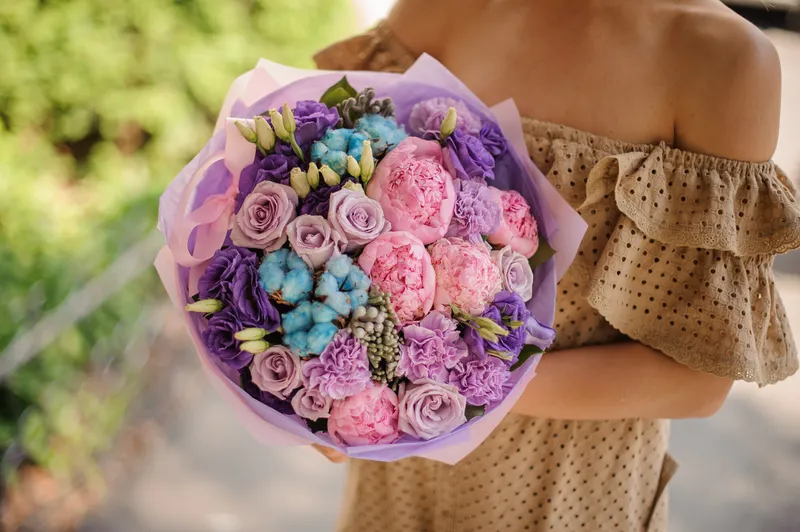
Seasonal flowers can give a florist a useful starting point, but “seasonal” does not prove that stems were grown nearby or that the bouquet will last longer. Ask what is in good condition that week and whether origin matters to your choice. A flexible colour brief may be easier to fulfil than a demand for one variety from a photograph. Quality also depends on harvesting, storage and handling.
The Royal Horticultural Society explains how different garden plants can supply cut flowers across the year. For a bought bouquet, ask the florist for care instructions for the actual stems. Start with a clean vase, keep foliage out of the water and choose a position away from radiators. Do not promise the recipient a fixed vase life for an unidentified mix of flowers.
If environmental impact matters to you, ask concrete questions about flower origin, packaging and reusable containers rather than treating a “local” label as a complete answer. A florist located nearby may still use imported flowers. Request simple packaging if that suits the gift and choose a size the recipient can use. For matching the choice to the person, see How to choose the perfect gift based on each person’s personality.
How to write a card that actually means something
A useful card has three parts: who it is for, why you are thinking of them and your name. For a birthday, you might write, “Happy birthday, Ana. I wish I could join you for coffee today. Love, Sam.” For a colleague, name the achievement or the help you are thanking them for. Specific words do more than a long message copied from a greeting-card list.
Check the spelling, accents and character limit before you submit the order. Keep apartment codes and delivery instructions out of the card field, where they may be printed for the recipient. If the message is in a language you do not write confidently, use a short phrase you understand and ask a trusted speaker to check it.
My practical tip: read the finished card aloud once before paying. If it sounds unlike something you would say, simplify it. Then save the final text with the delivery confirmation; it is much easier to resolve a missing card when you can show exactly what was requested.
When the recipient is unavailable
Decide on a fallback before dispatch. Ask whether the florist may contact the recipient, whether an agreed neighbour or reception can accept the bouquet, and what happens if nobody is reachable. Do not nominate a neighbour without their agreement. A planned call from the driver is often less disruptive than an unsuccessful surprise.
If timing is tight, ask which part of the request can realistically change: the delivery window, the bouquet design or the date. Keep an important detail, such as avoiding a disliked flower, explicit in the brief. For a broader budget comparison, see our guide to buying gifts at a sensible total price.
Frequently asked questions
Is it better to order from a local florist than an international platform?
In many cases, yes. A local florist knows what flowers are actually available, how long deliveries really take and the quirks of the city. Platforms can be convenient, but they sometimes work as intermediaries and do not always offer the same level of flexibility. For an important gift, direct contact with the person making the bouquet usually gives more peace of mind.
Can I order same-day flowers in a European city?
Often, yes, but you should never assume it. It depends on the city, the area, the time of the order, the florist’s workload and the availability of fresh flowers. The safest approach is to ask for confirmation before counting on it arriving in time, especially on Sundays, public holidays or high-demand dates.
Which flowers are the safest choice if I do not know the person’s taste?
Seasonal arrangements in soft tones are usually an elegant choice: warm whites, cream, dusty pink, natural greens or touches of peach. Avoid very strong scents if you do not know whether the person is sensitive to fragrance. It is also better to ask for a balanced bouquet that is easy to place, rather than something extravagant.
How can I make the gift feel personal if I am ordering it from another country?
Tell the florist why you are sending the gift, what the person’s style is like and where they are likely to place the flowers. Add a specific card and avoid generic messages. Personalisation does not always require rare flowers; often it comes from a well-chosen palette, careful delivery and words that sound genuinely like yours.
Keep reading
Step by step · 5 min read
How to choose the perfect gift based on each person’s personality
The best gift is usually the one that shows you have really noticed the person. A few clues to get it right based on their character, routines and what they already…
Guide · 5 min read
Promotions guide: when to buy gifts to save money without losing quality
January sales, Black Friday and VAT-free days are not equally useful for everything. When it makes sense to buy each type of gift, and how to tell whether the…
Journal · 5 min read
Original ideas to surprise someone on their birthday without spending too much
A good birthday does not depend on the budget. A simple dinner, a handwritten note or a small day trip can work better than an…