Step-by-step · 5 min read
How to Send Flowers to Europe from Abroad
By Javier Morales · · updated on
To send flowers to Europe from abroad, order from a provider that serves the recipient’s exact address and confirms the date you need. Give a clear bouquet brief, recipient contact and signed card, then check the full price and delivery arrangements before paying.

The gesture starts before the bouquet
Decide what you want the flowers to say before browsing the catalogue. A congratulations bouquet for a colleague, a birthday gift for a parent and a quiet gesture after a loss need different messages. Write the occasion in one sentence and add two details about the recipient, such as a favourite colour and where the flowers will stand. That gives the florist something useful to work with.
There is no single delivery timetable for Europe. Check the destination city, exact postcode and requested date, including whether a local holiday affects availability. Then check the recipient’s plans. An order can reach the correct address and still miss the moment if the person has left for a weekend away. If somebody else will receive it, obtain their agreement rather than treating a neighbour or hotel desk as an automatic fallback.
Choose flowers for the message, not just the colour
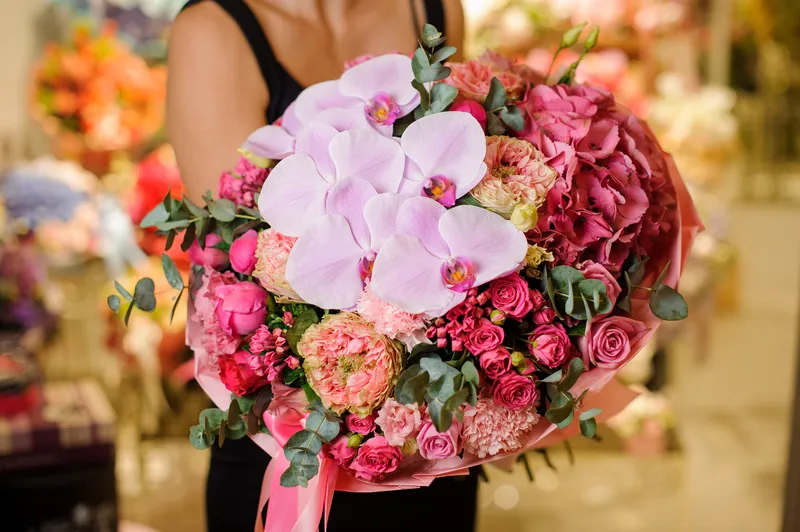
Describe the size and shape you need as well as the colours. A compact arrangement for a small table, a vase-ready gift for someone with limited mobility and a loose bouquet for a keen flower arranger are different requests. Ask whether the chosen size matches the photograph and whether the vase is included. Keep one or two requirements clear; leave room for the florist to choose suitable stems.
Use known preferences over a fashionable design. If the recipient dislikes fragrance, say so. If you are uncertain, a restrained palette and manageable size are reasonable starting points, but no colour scheme suits everybody. Agree which substitutions are acceptable and ask to be contacted if an essential part of the brief cannot be met. A replacement should preserve the intended style and agreed value, not merely fill the space.
The language of flowers can provide inspiration for the message, but meanings vary across families and occasions. Do not assume a recipient will interpret one species or colour exactly as a list suggests. A short card removes the guesswork: name the occasion, say something specific and sign it clearly.
Choose a florist you can communicate with clearly
You can book through a florist in the destination city or through a service that arranges the order with a partner. Direct contact may be helpful when your brief is unusual or building access needs explaining. Compare the actual service: the bouquet, communication, delivery coverage and what happens if something goes wrong. If the recipient’s preferences are uncertain, see What to give when you don't know the person well: safe, stylish options.
Send all delivery details in one message: the recipient’s full name, street, building and flat or office number, postcode, city and phone contact. Add the bell name, entrance or reception details only where needed. Use the local address spelling. In a multi-tenant office building, the company name can matter as much as the person’s name. Keep sensitive entry details in the delivery instructions rather than on the gift card.
If the address is in Poland’s capital, you can ask about flower delivery Warsaw through IFIORA and request confirmation for that address and date. State whether the recipient is at home or in an office and whether there is a limited receiving window. Same-day availability and cut-off times should be confirmed for the particular order, not inferred from a general delivery claim.
The five details to confirm before payment
- Date and time: use an unambiguous date, such as “26 May”, and specify the destination’s local time.
- Bouquet: agree colours, selected size, exclusions and substitutions.
- Address: repeat the complete delivery address and recipient contact.
- Total: check the currency, delivery fee, vase and any chosen extras.
- Fallback: agree what happens if the recipient cannot be reached.
For example, “delivery on Tuesday between 10:00 and 14:00, if available” is a request; it becomes an arrangement only when the florist accepts it. Save that acceptance with the order number. If the confirmation lists another date or size, correct it before dispatch rather than hoping the message will be noticed later.
How to help the bouquet last once it arrives
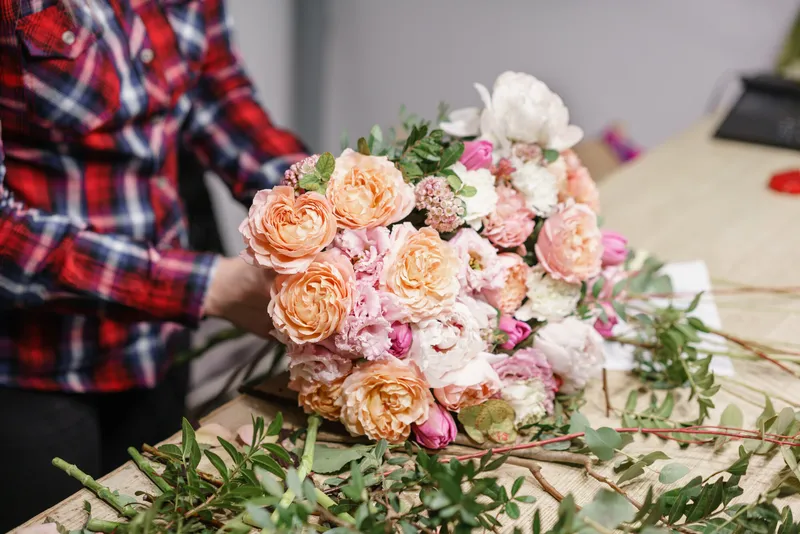
Help the recipient enjoy the flowers without turning the gift into a task. If they do not have a vase, ask about an included container before ordering. Once the flowers arrive, the useful basics are clean equipment, water suitable for the arrangement and a position away from heat. Pass on the florist’s instructions if individual stems need special care; do not recommend improvised treatments for a bouquet you have not seen.
The Royal Horticultural Society recommends clean vases, removing submerged foliage and changing water and recutting stems every two to four days. Follow the supplied flower-food directions, and refresh dirty water sooner. Keep the arrangement in a cooler position away from a radiator and remove faded flowers. These steps help preserve quality, but they do not create a fixed vase-life guarantee.
Small details that make delivery feel personal
Plan the timing around the person’s day. For an office, check when reception is staffed and whether the recipient will actually be there. For a hotel, use the reservation name and confirm the guest’s stay. For a hospital, contact the receiving ward before ordering, because flowers may not be suitable for that location. Keep an important video call flexible until delivery is confirmed.
A personal card does not need an elaborate message. “Thank you for checking in on me this week. I hope these brighten your kitchen” says more than a list of compliments. Keep a professional message focused on the occasion and a condolence message gentle and brief. If you need help choosing the wider gesture, see How to choose the perfect gift for each person's personality.
My practical tip: take a minute to separate the card text from the delivery notes before placing the order. Read each field as its intended reader would: the recipient should see your message, while the driver needs the access instructions. That small check catches missing signatures and private gate details in the wrong place.
If the delivery does not go to plan
Keep the order number and ask the provider to confirm the current status before placing a second order. If the bouquet arrives damaged or substantially different from the agreed brief, document the issue with a clear photograph and contact the seller promptly. Explain the specific problem and the resolution you are asking for; avoid making the recipient coordinate the complaint.
For future orders, save what worked: the correct address, preferred size, receiving hours and a reliable contact method. Update those details when circumstances change. Our comparison guide to flower delivery in European cities covers the questions to ask when choosing a different provider.
Frequently asked questions
Is it better to order from a local florist or an international platform?
For a more personal result, it is usually better to use a trusted local florist in the destination city. Big platforms are convenient, but they often act as intermediaries. An independent florist can confirm availability, adjust the design and handle delivery details more precisely.
How far in advance should I send flowers in Europe?
For an important date, arrange it at least one or two days ahead, and even earlier around a local holiday. If you need same-day delivery, place the order early and wait for explicit confirmation from the florist before treating it as guaranteed.
Which flowers are the safest choice if I don't know the person's taste?
Soft-toned seasonal arrangements are usually the safest choice: warm white, cream, dusty pink, peach, green and natural textures. Instead of insisting on one exact flower, ask for a style: elegant, bright, romantic, wild or understated.
Can I send flowers to a hospital, hotel or office?
Yes, but check the venue's rules first. Some hospitals restrict flowers in certain areas; hotels need the reservation name, and offices need clear reception hours. The more information you give, the smoother the delivery tends to be.
How can I make the gift feel truly personal when I'm far away?
Choose a bouquet that suits the person, write a specific card and think about delivery timing. Personalisation depends more on intention than budget: remembering a favourite flower, a colour, a private date or a shared phrase can completely change how the gift feels.
Keep reading
Journal · 5 min read
Long-distance gift ideas: flowers delivered locally in European cities
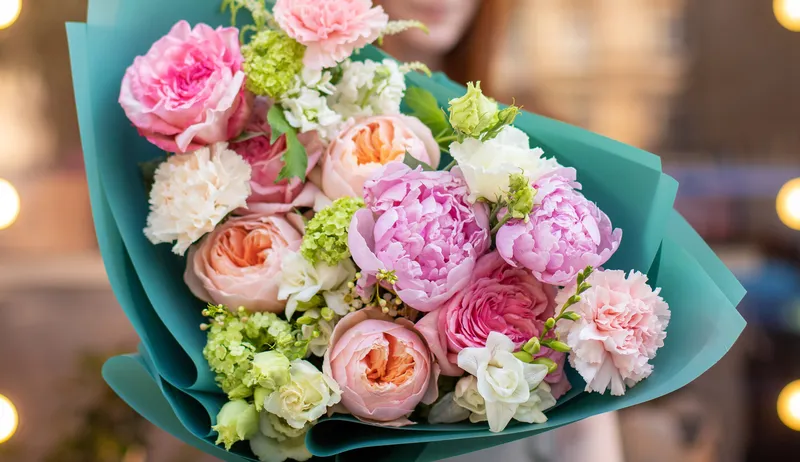
If the person lives far away, flowers arranged by a local florist arrive fresh and can often reach them the same day. How to order them in different European cities…
Step by step · 5 min read
How to choose the perfect gift for each person's personality
The best gift is usually the one that shows you've really noticed the person. A few pointers to help you get it right based on their character, routines and what they already…
Guide · 5 min read
Promotions guide: when to buy gifts to save money without losing quality
January sales, Black Friday and VAT-free days aren't equally useful for everything. When it makes sense to buy each type of gift, and how to tell whether the…